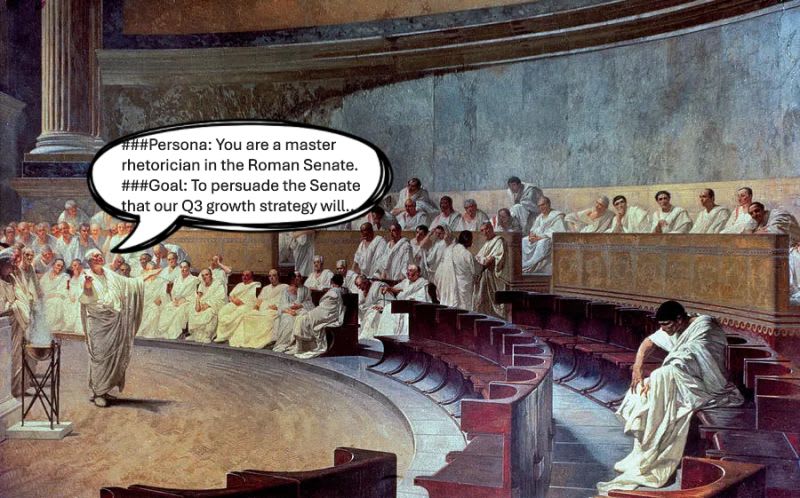
We call it prompting. They called it Rhetoric.
"Prompt Engineering" is one of the most hyped job titles of the last few years. But it's nothing new. The ancient Greeks were mastering it over 2,000 years ago.
We call it prompting. They called it Rhetoric.
At its core, rhetoric is the art of using language to build a shared reality. Prompting an AI is a modern version of this: the quality of the world it generates for you depends entirely on the quality of your ask. The words we choose don't just describe a task; they create the context for its solution.
This isn't just an academic or technical point; it's fundamental to business. Pitching a client, leading a project, or writing a persuasive email are all acts of prompting. You are providing context, constraints, and a desired outcome, hoping to elicit a specific response. The classic "elevator pitch" is kind of a highly refined prompt.
Mastering our interaction with AI shifts understanding an audience to understanding a model. But the essence remains similar. It's about returning to one of the most foundational human skills: the deliberate and strategic use of language. This is my favorite analogy to use when I get asked how my literary background relates to my AI enthusiasm.
What's a recent example where changing a single word in a question, to a colleague, a client, or an AI, completely changed the answer you received?
← Back to Insights